The Apollo Candle Works
by David F Radcliffe
The story of J Kitchen and Sons, the Candle Kings, is central to the industrial and social history of Sandridge / Port Melbourne. Most know the company merged with Lever Brothers of Sydney becoming Lever & Kitchen in 1962.[i] Lesser known is the merger in 1885 that created “J Kitchen & Sons and Apollo Candle Company”.[ii] This brought the recently opened Apollo Candle Works on the Brisbane River at Bulimba into the growing Kitchen empire. Although they simplified the name to J Kitchen & Sons Ltd in 1901[iii] the name Apollo remains part of the identity of Bulimba, a suburb that has many interesting parallels with Port Melbourne.
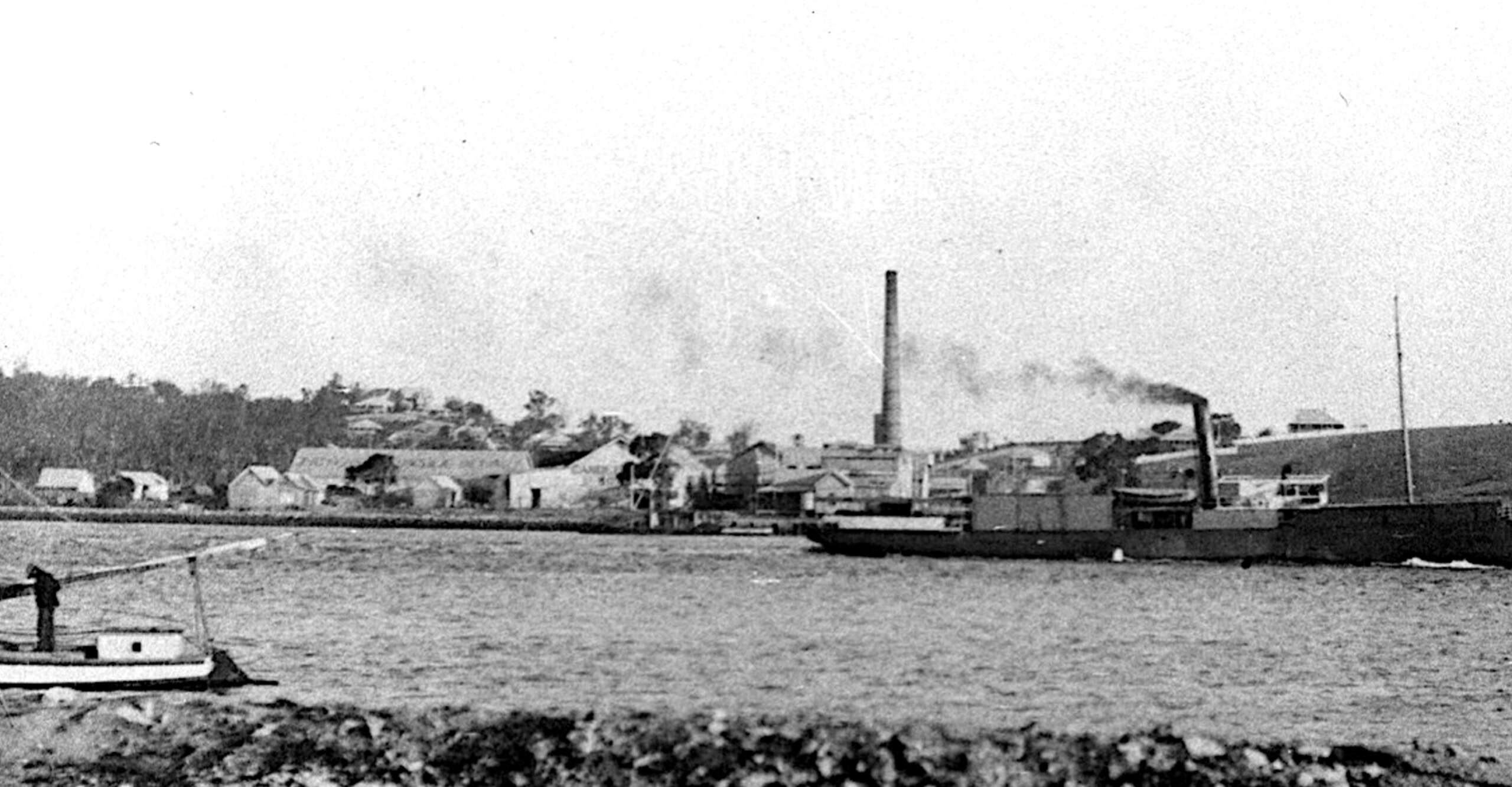
Registered in 1872, the Apollo Stearine Candle Company commenced production on the banks of the Maribyrnong River in Footscray in 1873.[iv] The name of the company is significant. Candles made of stearine were far superior to those made from tallow; better burning and far less smelly. J Kitchen & Sons were the first in Australia to perfect the separation of stearine from tallow on a commercial basis giving them a distinct advantage in the candle market.[v] However, the entry of a new candle maker with stearine in its title meant J Kitchen & Sons now had a serious local competitor.

In 1877, the Apollo Stearine Candle Company expanded operations to Queensland, located initially in South Brisbane. Four years later, they erected a purpose-built factory on a greenfield site downriver at Bulimba.[vi] As with the J Kitchen & Sons facility in Sandridge, the Apollo Candle Works was located on swampy land away from the settled areas of Bulimba, still a semi-rural district at that time. Direct river access enabled the delivery of raw materials, including coal, and the distribution of finished products. In 1893, the Apollo works was submerged, like much of low-lying Brisbane, in the massive Black February floods.[vii]
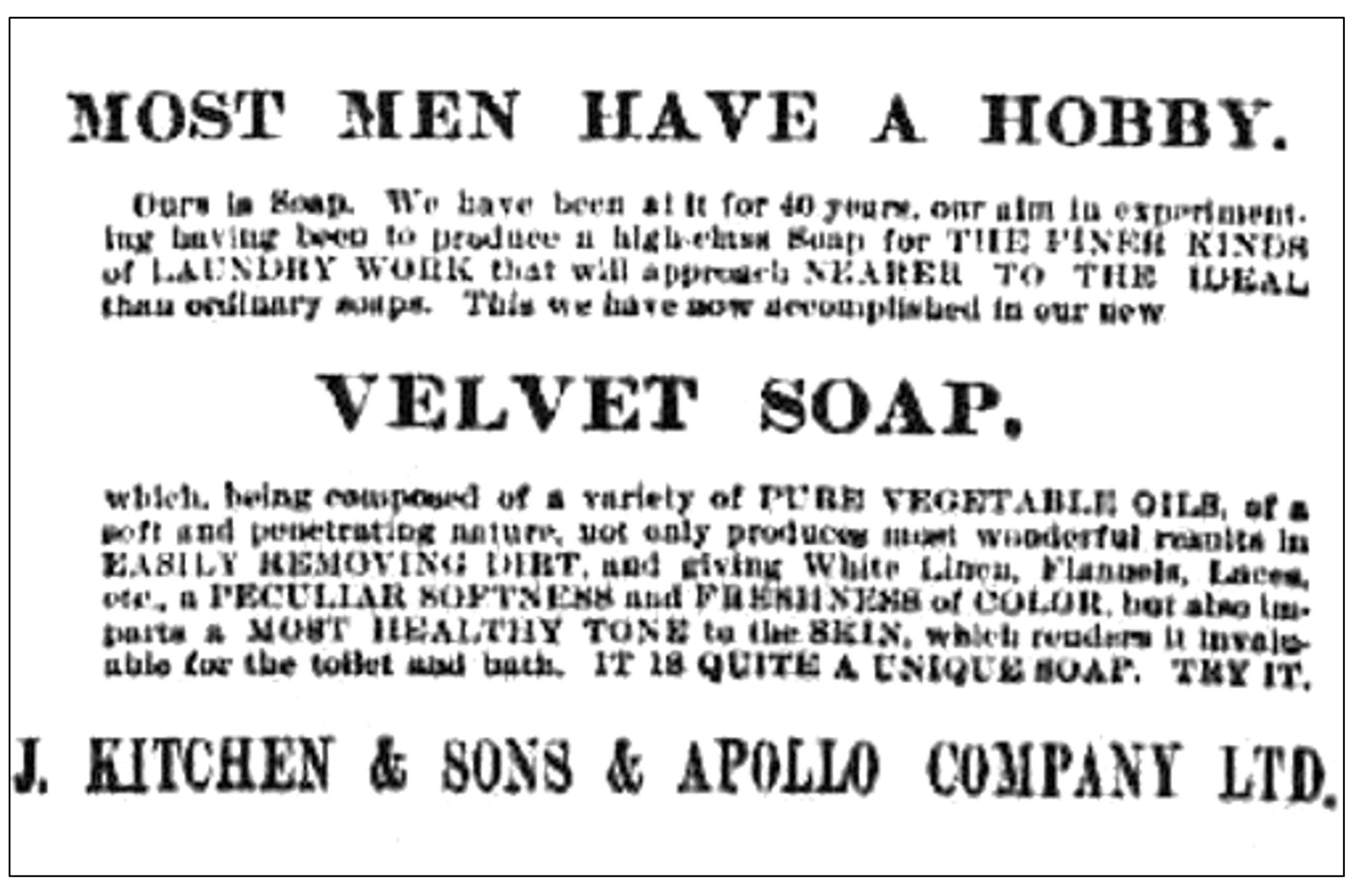
It was J Kitchen & Sons and Apollo Candle Company that trademarked in 1896 what became the company’s most enduring brand, Velvet soap.[viii] Early newspaper advertisements were rather wordy as they explained the many benefits of the new product.[ix]
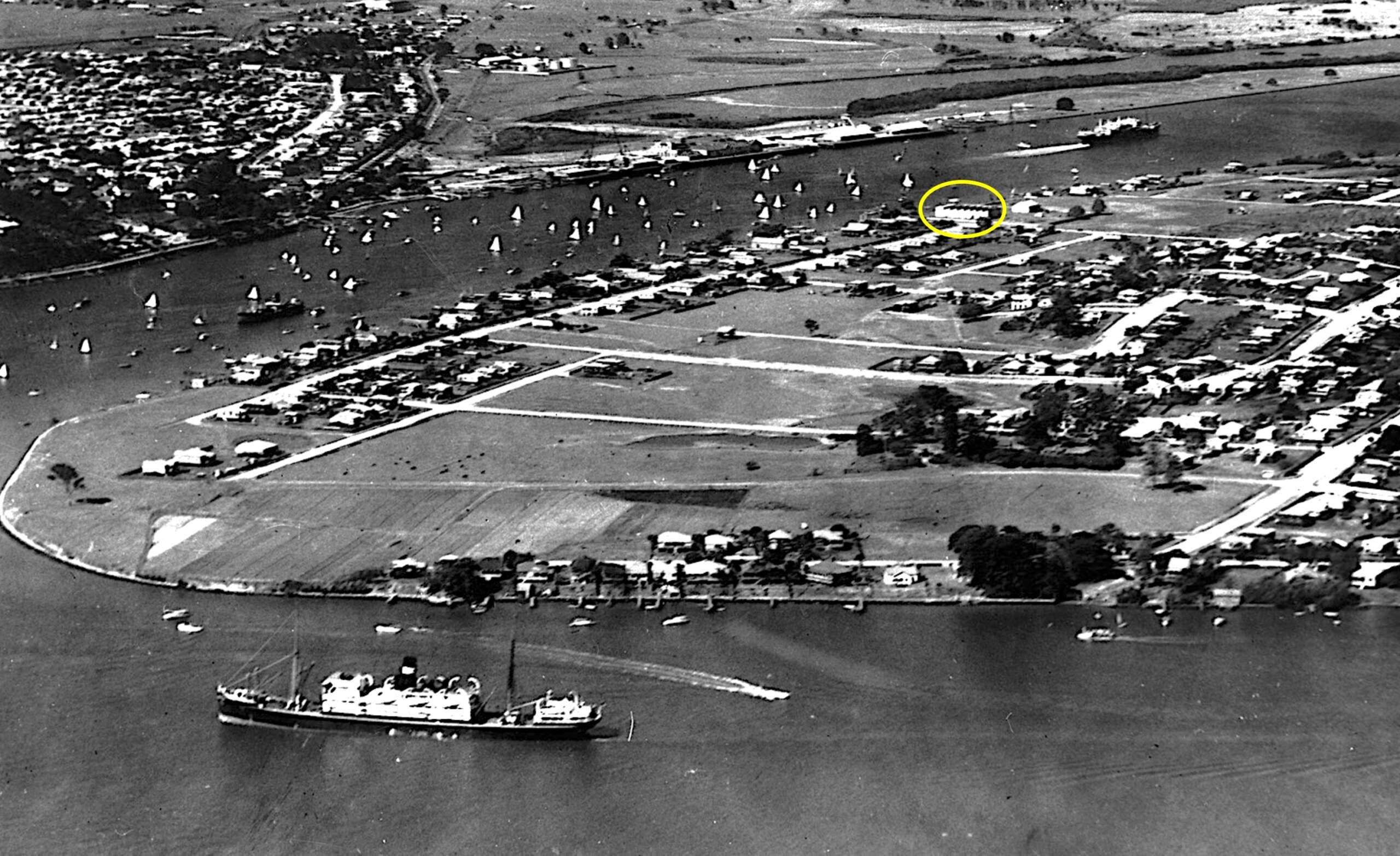
In the mid-1920s, J Kitchen and Sons moved production in Brisbane to a new facility across the river at Newstead.[x] They sold the Apollo site to Neptune Oil in 1926, a company founded by some members of the Kitchen family in 1909.[xi] The landmark chimney came down in 1930.[xii] The once sprawling facilities of the original Apollo Candle Works were replaced by a small industrial building with a saw-toothed roof.
Like Port Melbourne, sailing was a popular pastime in Bulimba from the early days. As a pocket of land formed by a ninety-degree plus bend in the lower reaches of the Brisbane River, Bulimba has water on two sides, ideally suited for hosting sailing regattas. In the first half of the 20th century water-front land either side of the former Apollo Candle Works was sold and slipways for building small craft and jetties for mooring boats proliferated.
The following series of images illustrate the transformation of the area around the Apollo Candle Works (circled) between 1918 and 1946. Several riverside housing developments, including the New Dock Estate, were floated in the years following WWI. The 1936 aerial photo reveals the modest number of houses built on these new estates and the patch of swampy ground remaining behind the site of the former Apollo Candle Works. The 1946 photo documents the massive industrialisation of the area during WW2.
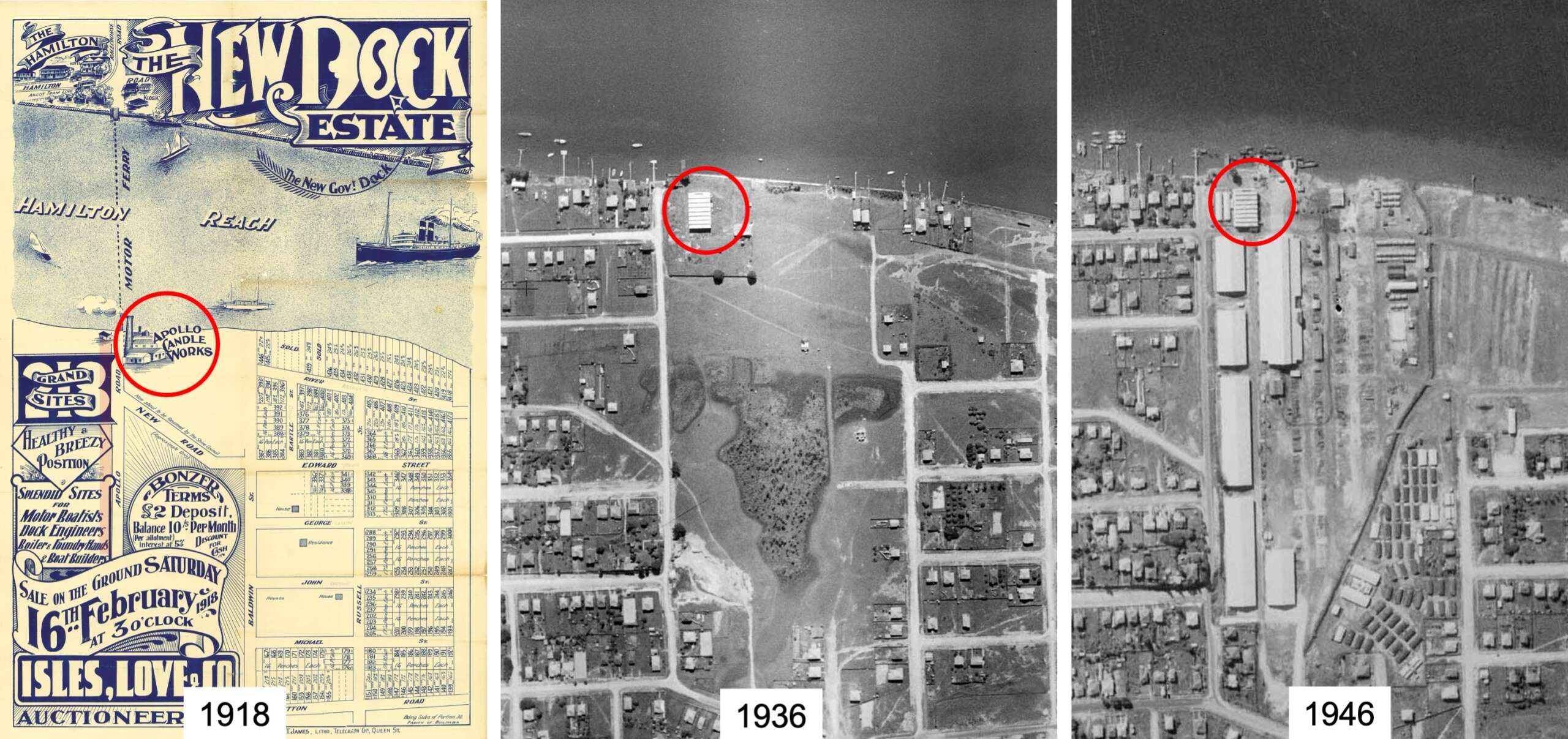
In 1942, the site was transformed into the Apollo Barge Assembly Depot (ABAD).[xiii] Here, Engineer Amphibian units of the US Army assembled prefabricated 300-ton steel and 200-ton wooden barges for use in the Pacific Campaign.[xiv] The structures are reminiscent of those erected near the Fishermans Bend estate during the war and the presence of American forces echo what happened around Port Melbourne including the camp on North Port Oval.
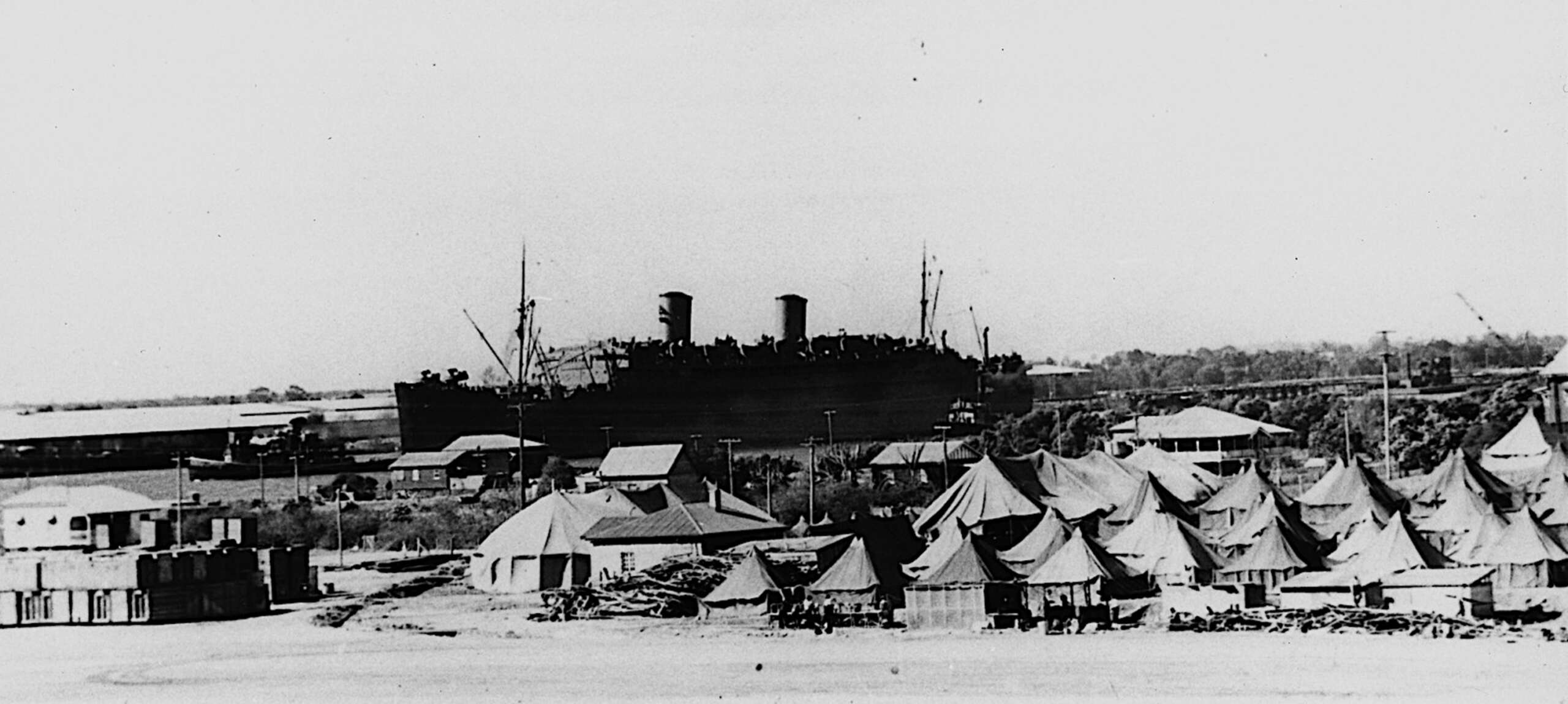
The Apollo Candle Works in Bulimba and that of J Kitchen & Sons in Port Melbourne form a serendipitous link between the place where I grew up and the place where I chose to retire. Apollo Road, leading to the site of the former candle works, the Army Engineering facilities that replaced it, boatyards and jetties, and the kids from the nearby migrant hostel were all part of my world as a child. Neighbours with their bikes crossing the river via the Bulimba ferry to work on the Newstead wharves, or the gasworks or the sugar refinery shaped my imagination. These formative years spent in the close-knit enclave of Bulimba makes it easy to feel at home in Port Melbourne with its many historical parallels. Both places have been transformed in recent decades through gentrification and new housing developments pricing many out of these two suburbs that had humble beginnings.
And the parallels continue. In 2024, an apartment complex proposed behind the site of the Apollo Candle Works looks eerily like the one built a decade earlier on Ingles Street where J Kitchen & Sons once stood.

History is a thread that helps us make sense of the present through exploring the past.
[i] Bak, K. 1988 A Lever & Kitchen Album, Lever & Kitchens Pty Ltd. Balmain. NSW.
[ii] Kitchen, C. 1933 ‘John Kitchen, Chemical Industry Pioneer’, Victorian Historical Journal, Vol 64 No 1, pp. 46-58.
[iii] 1901 ‘MONETARY AND COMMERCIAL.’, The Argus (Melbourne, Vic. : 1848 – 1957), 14 September, p. 12. , viewed 02 Aug 2025, http://nla.gov.au/nla.news-article9608249 Some advertising still used the combined Kitchen/Apollo name as late as 1906.
[iv] 1873 ‘FRIDAY, DECEMBER 5, 1873.’, The Argus (Melbourne, Vic. : 1848 – 1957), 5 December, p. 4. , viewed 24 Jul 2025, http://nla.gov.au/nla.news-article5876892
[v] Radcliffe, D.F. 2024, Making It Here: Four Enterprising Immigrant engineers and the Evolution of Manufacturing in Port Melbourne, PenFolk, p. 16.
[vi] 1881 ‘The Apollo Candle Company’s New Works.’, The Brisbane Courier (Qld.: 1864 – 1933), 3 Sept, p. 5. , viewed 24 Jul 2025, http://nla.gov.au/nla.news-article909625
[vii] 1931 ‘WHAT BRISBANE MISSED IN THIS YEAR’S FLOOD.’, The Queenslander Illustrated Weekly (Brisbane, Qld. : 1927 – 1939), 12 February, p. 32. , viewed 02 Aug 2025, http://nla.gov.au/nla.news-article23135097
[viii] NAA: A11731, 4711 Application for Trade Mark Titled Velvet in respect of common soap by J Kitchen and Sons and Apollo Company Limited, 1896
[ix] 1897 ‘Advertising’, The Herald (Melbourne, Vic. : 1861 – 1954), 17 July, p. 1. , viewed 04 Aug 2025, http://nla.gov.au/nla.news-article241134611
[x] J Kitchen & Sons, Heritage Citation, Brisbane City Council. https://heritage.brisbane.qld.gov.au/heritage-places/2298 Accessed 27 July 2025.
[xi] 1909 Registered Companies, Dun’s Gazette, Vol. 2 No. 21 (November 22), p 247.
[xii] 1930 ‘Brisbane Landmark Demolished’, Advance (J Kitchen & Sons Magazine), Vol 6, No. 24, pp. 13-14. PMHPS Collection.
[xiii] Bulimba Army Barracks, Heritage Citation, Brisbane City Council. https://heritage.brisbane.qld.gov.au/heritage-places/444 Accessed 27 July 2025.
[xiv] Daley, B. Heritage and History of the Bulimba Army Camp, Spanner News (Newsletter of the RAEME Association Qld), March 2021, pp. 9-10.